
Where Fiction Meets Family History
For readers drawn to genealogy mysteries, the appeal isn’t just the puzzle, it’s the humanity. Like initials carved into the bark of an old tree, or a fading name inked into a forgotten ledger, every mark is a trace of someone who lived, hoped, loved, and left something behind. Behind each name on a family tree lies not just data, but a story, and often, a secret waiting to be found. Every hidden document hints at a truth once concealed, a wound quietly carried, or a hope never fulfilled.
When I began writing my paranormal romantic mystery series Whispers at Briarwell House, I didn’t set out to write “historical fiction” in the traditional sense. But I wanted history to shape everything. Every character. Every setting. Every unexplained whisper in the hall.
The Hidden Lives Between the Lines
One of the most powerful things about genealogical research, and what makes it such a compelling foundation for fiction, is how often the gaps speak louder than the records themselves.
A young woman appears on a 1910 census as a domestic servant… and then disappears from public record. A soldier’s name surfaces in a forgotten pension file, attached to a single letter written during a war no one now remembers. A child is born during an influenza outbreak, baptized quietly, and never mentioned again. What happened?
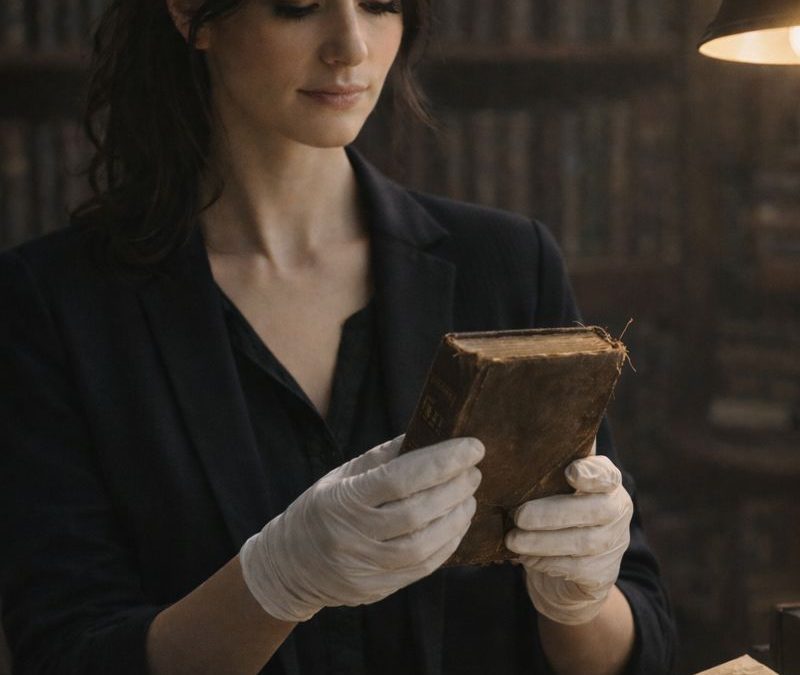
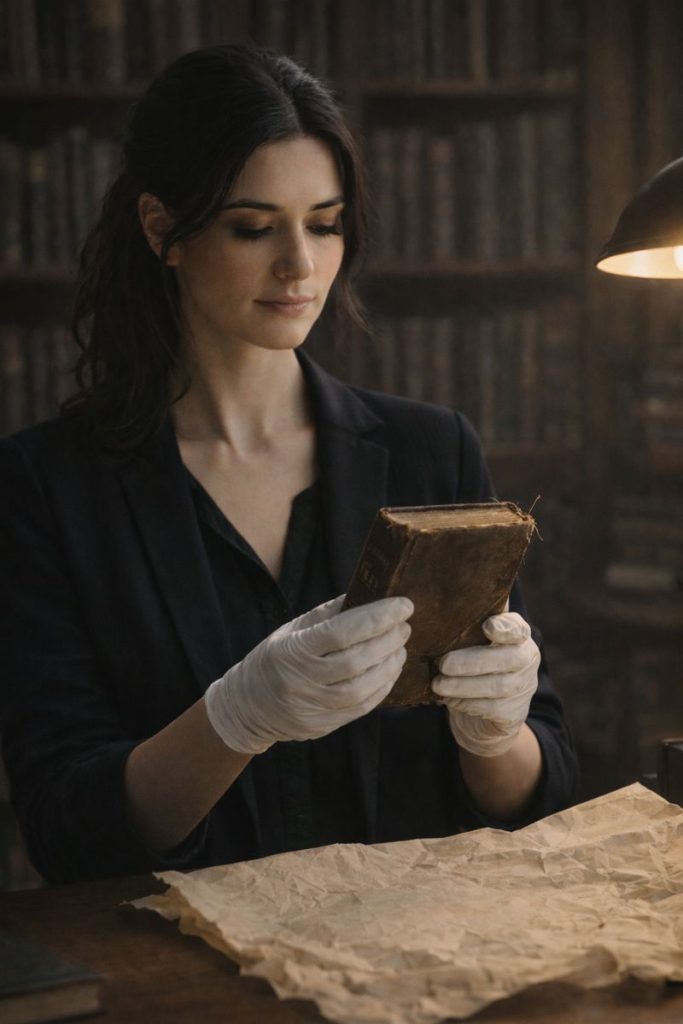
These unknowns are the heart of every good genealogy mystery novel, and they’re the spark that ignites a writer’s imagination. In Whispers at Briarwell House, my main character Avery Sinclair follows similar breadcrumbs: a name here, a clue there. She pieces together long-forgotten stories using archives, church records, and the dusty corners of the Greyhaven College library. Genealogy gives us the evidence. Fiction lets us explore the emotion.
A Ghost’s Memory of the Past
Because this story includes paranormal elements, I also wanted to explore the idea that history doesn’t just linger in books it lingers in places.
Briarwell House, the setting for the first book in the series, is more than an old Craftsman-Victorian home. It’s a character in its own right. Within its walls resides the ghost of Duncan McKenzie, a 1920s scholar whose mysterious death was recorded, then quietly forgotten. And isn’t that what history often becomes? A whisper, barely heard. A shadow just out of view.
Avery’s relationship with Duncan, slow-burning, bittersweet, and unfolding across time, is deeply tied to the research she undertakes. Each discovery brings her closer to the truth about Duncan’s past… and to a deeper understanding of her own purpose in the present.
Writing Fiction That Feels True
For fans of historical fiction and genealogy-inspired novels, the thrill lies not just in solving a riddle, but in connecting to lives that once were, lives that often echo our own.
As a writer, I try to approach historical storytelling with care. I want the emotional truths to be as grounded as the factual ones. Whether it’s a line from an old journal, a photo with no caption, or a forgotten marriage record, I ask myself: Who were they really? And what did they want that no one remembers? In fiction, we get to answer those questions. Not always with facts, but with feeling. And that’s the heart of writing history into fiction: not just reconstructing the past, but honoring it.
Behind the Blog
As a little bonus for fellow writers, readers, or those curious about the visual side of storytelling, I’ve also created a few Pinterest boards and pins inspired by this post. These capture the aesthetic of Whispers at Briarwell House and the emotional core of writing history into fiction.
If you’re the type to fall down rabbit holes of moody Victorian houses, dusty archives, or vintage love letters… you’re in good company.